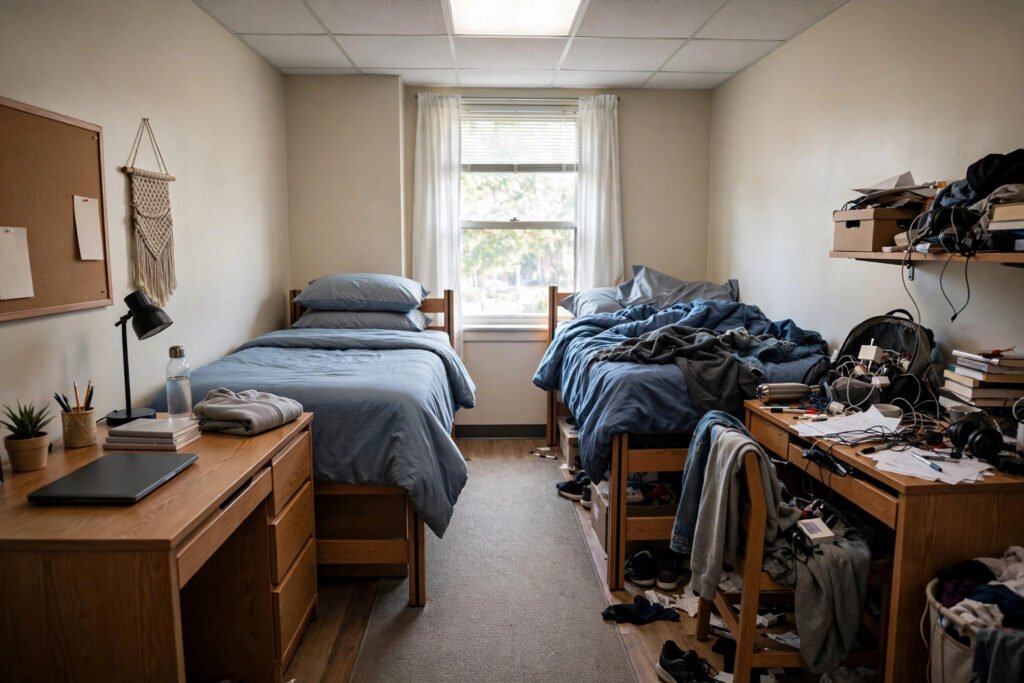
How to Deal With a Difficult College Roommate
Nothing tests your conflict-resolution skills like sharing 150 square feet with a stranger who has completely different ideas about cleanliness, sleep, and acceptable 2 a.m. noise levels. The difficult college roommate is a rite of passage — surveys consistently find that a majority of students report significant roommate conflict at some point. Most of it is solvable. A small fraction is not. Knowing which situation you are in — and what to do about each — is the skill.
This guide covers how to deal with a difficult college roommate: preventing problems before they start, resolving the common conflicts, and knowing when to escalate or move.
Prevention: The Roommate Agreement
The best roommate conflict is the one that never happens. In the first week — before any resentment builds — have an explicit conversation covering: sleep schedules (lights-out times, alarms, naps), guests (how often, how late, overnight guests — the number-one conflict source), cleanliness standards (define “clean” concretely; your clean and their clean are different planets), shared items (food, toiletries, supplies — what is communal vs. personal), noise (headphones rules, speaker use, phone calls), and study needs (quiet hours during midterms/finals).
Many RAs provide a roommate agreement template — use it, even if it feels awkward. Writing things down depersonalizes them: it is not “you are disgusting,” it is “we agreed dishes get done within 24 hours.” Revisit the agreement monthly in the first semester; needs change as you settle in. Students heading to campus should also have their gear sorted — picking the right laptop for college is one less thing to argue about when you both need the desk.
The Big Four Conflicts (and Scripts That Work)
1. Cleanliness
The classic. The fix is specificity, not nagging: “Can we agree that food trash goes out the same day and dishes do not sit longer than a day?” beats “You are such a slob.” Propose systems (a chore rotation, a weekly 15-minute joint clean) rather than complaints. If they agree and do not follow through, one calm reminder referencing the agreement; if the pattern continues, escalate to the RA.
2. Noise and sleep
Different sleep schedules are the most legitimate irreconcilable difference. Practical fixes: white noise machines (non-negotiable dorm essential), sleep masks, agreed quiet hours (e.g., midnight–8 a.m. on weeknights), and headphones for all media. If your roommate games with voice chat until 3 a.m., that is not a lifestyle difference — it is a violation of reasonable quiet, and the RA will back you.
3. Guests and significant others
The “unofficial third roommate” — a partner who is effectively living in your double — is the conflict most likely to require intervention. Set the boundary early: overnight guests limited to 2–3 nights per week maximum is a common standard, and many housing agreements formalize it. Frame it around your needs (“I need the room to myself to sleep before early classes”) not their relationship.
4. Borrowing and boundaries
Food, clothes, chargers, toiletries — small takings breed large resentments. The rule that works: ask every time until explicitly told otherwise, and label what is off-limits. It feels petty; it prevents explosions. For neighbor-adjacent issues like thin walls and shared spaces, the principles in our guide to dealing with noisy neighbors apply surprisingly well to dorm life.
Communication: How to Raise Issues Without War
Timing and framing decide whether a conversation resolves or detonates. Raise issues early — resentment compounds, and the fifth offense discussed calmly beats the fiftieth discussed in fury. Use “I” statements: “I can’t sleep when the lights are on past 1” works; “You are so inconsiderate” starts a war. Pick neutral moments: not at 2 a.m. when you are furious, not in front of friends. Propose solutions, not just complaints: “Could we try quiet hours on weeknights?” gives them something to say yes to.
Document patterns if things are not improving — dates, what happened, what was agreed. You will need this if you escalate. And manage your own contribution honestly: ask “is there anything I am doing that bothers you?” Sometimes the difficult roommate is, partially, you. Small gestures help too — a shared snack stash or splitting a pizza goes surprisingly far in dorm diplomacy.
When to Involve the RA
RAs are trained mediators — use them. Escalate when: direct conversations have failed repeatedly, the behavior violates housing policy (smoking, unauthorized occupants, theft), you feel unsafe or harassed, or the conflict is affecting your sleep, grades, or mental health. This is not “tattling”; it is using the support system your housing fees pay for. Come with your documentation and a clear account of what you have tried.
Mediation works more often than students expect — a neutral third party in the room changes the dynamic completely. The American College Health Association notes that roommate stress is a significant factor in student wellbeing; getting help early protects your health, not just your comfort. Go early rather than late: RAs consistently say the cases that resolve best are brought in at the first pattern, not the fiftieth incident. For the psychological side of conflict, the American Psychological Association’s conflict-resolution resources offer evidence-based techniques.
When to Request a Room Change
Sometimes the fit is just wrong — fundamentally incompatible schedules, values, or habits that no agreement fixes. That is okay; it is not failure. Most housing offices allow room-change requests, typically after a mediation attempt, with switches more available after the first semester. If you are miserable and mediation has failed, move. Your GPA, sleep, and mental health are worth more than the hassle of switching rooms.
For next year: choose carefully. Living with a close friend is not automatically better (money and habits end more friendships than distance does). The best roommate is often a “friendly acquaintance” — someone you like but whose friendship does not depend on the living situation. And consider a single if your school offers them and the cost works; the premium buys something priceless.
The Bottom Line
Most roommate conflicts resolve with an early explicit agreement, calm “I”-statement conversations, and proposed solutions. Escalate to the RA when direct efforts fail or policy is violated, and do not hesitate to request a move if the fit is fundamentally broken. The meta-skill — addressing friction directly and early — will serve you in every shared living situation, marriage, and workplace for the rest of your life. College is just where you learn it.
Frequently Asked Questions
How do I deal with a messy college roommate?
Set specific, written standards early (not vague “be cleaner”), propose systems like chore rotations, give one calm reminder referencing the agreement, then involve the RA if the pattern continues.
Can I request a roommate change in college?
Yes — most housing offices allow room-change requests, usually after attempting mediation. Availability is best after the first semester. Document the issues and what you have tried.
What should be in a roommate agreement?
Sleep/quiet hours, guest and overnight policies, cleanliness standards, shared vs. personal items, noise rules, and study-time needs. Revisit it monthly in the first semester.
Should I live with my best friend in college?
Not necessarily. Close friendships can strain under living friction, while “friendly acquaintance” roommates often work better — the relationship does not depend on the living situation. Choose for compatibility of habits, not closeness.