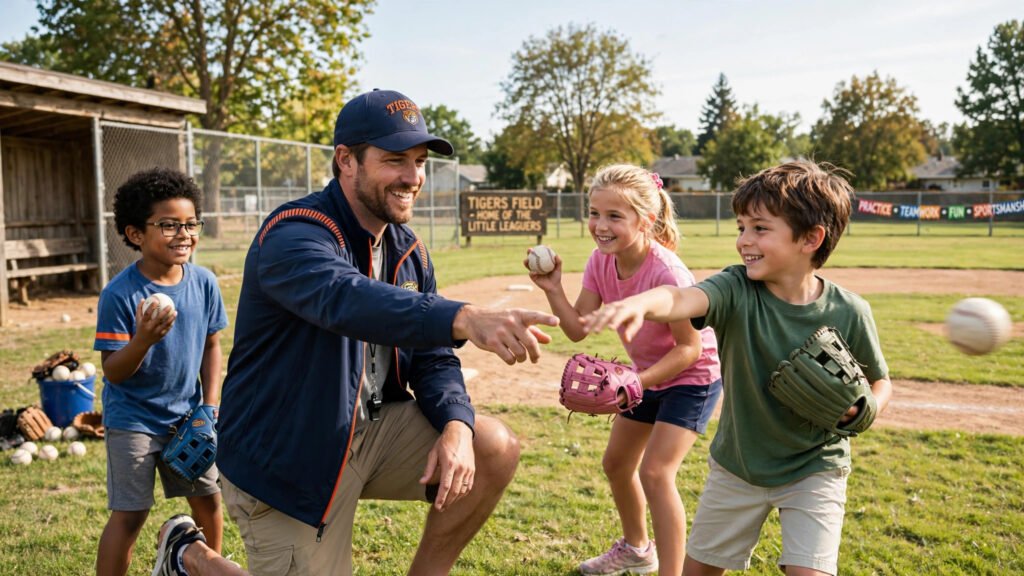
How to Coach Little League Baseball for Beginners
So you volunteered to coach Little League — congratulations, and condolences to your free evenings. Coaching kids’ baseball is one of the most rewarding things you’ll ever do, and one of the most intimidating if you’ve never done it. The good news: at the Little League level (ages 4–12), you don’t need to be a baseball genius. You need patience, organization, and the ability to make practice fun enough that kids want to come back. Here’s how to coach Little League baseball as a beginner, from your first practice plan to the end-of-season party.
Start With the Right Mindset
Your job isn’t winning — it’s development and fun. Research consistently shows kids quit youth sports primarily because it’s not fun anymore, and the coach is the biggest factor. At ages 4–8, success means every kid touches the ball constantly, nobody stands in line, and everyone leaves smiling. At ages 9–12, you can layer in real skill development and gentle competition, but fun remains the foundation.
Set expectations with parents early: hold a brief preseason meeting covering your philosophy (development over wins), playing-time approach (everyone plays, everyone tries multiple positions), communication method, and volunteer needs. Most parent conflicts stem from mismatched expectations — a 15-minute meeting in week one prevents 90% of them. Review the official rules and coach resources at Little League International, which offers free coaching guides and training videos.
Planning Practices That Work
The Golden Rules of Youth Practice
Keep practices to 60–90 minutes max — attention spans are short. Plan every minute in advance; dead time is when chaos and boredom strike. Use stations: split kids into small groups rotating through hitting, fielding, and throwing every 12–15 minutes, so everyone stays active. End every practice with something fun — a scrimmage, a relay race, a silly competition. And always, always bring extra water and a first-aid kit.
What to Teach First
Prioritize in this order: throwing mechanics (the foundation of everything), catching (start with tennis balls — less fear), basic hitting stance and swing, then base running and fielding positions. Don’t teach advanced strategy to young kids; a 7-year-old who can throw and catch reliably is ahead of 90% of peers. Demonstrate everything yourself, keep instructions to one or two cues at a time (“elbow up,” “watch it into the glove”), and praise effort and improvement relentlessly — specific praise (“great follow-through on that throw!”) beats generic “good job.”
Game Day Management
Your lineup card is your best friend: prepare batting orders and defensive rotations before arriving, ensuring every kid plays multiple positions over the season (pitcher and catcher need extra safety consideration). Arrive 30 minutes early, warm up with structured throwing progressions, and keep dugout energy positive — no yelling at kids for errors, ever. Errors are how they learn; your reaction teaches them whether mistakes are safe.
Handle umpires and opposing coaches with grace — you’re modeling sportsmanship for twelve impressionable kids. If a parent gets heated, address it privately after the game, never during. And remember safety basics: no on-deck swinging near others, helmets always when batting, and lightning means everyone off the field immediately. The CDC’s HEADS UP concussion program offers essential guidance on recognizing head injuries in youth athletes — review it before the season.
Dealing With Different Skill Levels
Every team has a range: the travel-ball kid who’s played for years and the first-timer who just learned which hand the glove goes on. Your challenge is challenging the advanced kids without crushing the beginners. Solutions: pair advanced players as “assistant coaches” for drills (they love the responsibility), give skilled kids harder variations (throw on the run, backhand plays), and celebrate beginners’ milestones loudly — first clean catch deserves team-wide recognition.
Playing time philosophy matters enormously at this age. Little League rules mandate minimum play, but go beyond the minimum: kids who sit develop neither skills nor love for the game. Rotate positions freely — the kid stuck in right field all season learns nothing and quits. Your goal is twelve kids who want to play again next year, not a trophy.
Keeping It Fun All Season
Fun is a coaching skill you can practice deliberately. Theme practices occasionally (wiffle ball day, parents vs. kids scrimmage), invent silly awards (best hustle, best teammate, most improved), and let kids have input — voting on the end-of-season party or choosing practice games builds ownership. Keep your energy up even when you’re tired; your mood is contagious, for better or worse.
Connect baseball to the broader sports world to keep kids engaged: take the team to a local game if affordable, or organize watch parties — learning how to watch live sports without cable helps families follow the pros together. End the season with a real celebration: trophies or medals for everyone, a team party (a budget-friendly team party works for baseball too), and personal notes to each player about what they improved. Those notes get kept for years.
Getting Certified and Working With Your League
Most leagues require coaches to complete a background check and some form of training — Little League’s Diamond Leader program and various coaching certifications cover safety, first aid basics, and positive coaching principles. Take them seriously rather than treating them as red tape; the concussion protocols and emergency procedures genuinely matter when you’re responsible for twelve kids.
Build a relationship with your league’s board and veteran coaches early. They’ve solved every problem you’ll face — difficult parents, lopsided talent, rainout scheduling — and most are generous with advice. Volunteer for field maintenance days and league events; coaching is a community role, and the goodwill you build pays dividends when you need a favor mid-season.
Conclusion
Coaching Little League as a beginner comes down to five things: prioritize fun and development over winning, plan practices down to the minute with active stations, teach fundamentals in the right order with specific praise, manage game days with preparation and positivity, and celebrate every kid’s growth all season long. You won’t be perfect — no coach is — but the kids won’t remember your win-loss record. They’ll remember whether their coach believed in them. Be that coach.
Frequently Asked Questions
Do I need baseball experience to coach Little League?
No. At ages 4–12, organization, patience, and enthusiasm matter far more than playing experience. Little League provides free coaching resources, and most leagues pair new coaches with mentors.
How much time does coaching Little League take?
Expect 4–6 hours per week: 2–3 practices/games plus planning, communication, and field prep. Tournament weeks and opening/closing ceremonies add more. It’s a real commitment — go in eyes open.
What equipment does a Little League coach need?
The league typically provides team gear (bats, helmets, catcher’s equipment, bases). Coaches should bring: a lineup card system, first-aid kit, extra water, tennis balls for beginners, cones for drills, and a positive attitude.
How do I handle difficult parents?
Set expectations in a preseason meeting, communicate proactively, never engage during games (address issues privately afterward), and lean on your league’s board for backup when needed. Most conflicts dissolve with clear, early communication.
What if a kid is afraid of the ball?
Extremely common and fixable. Use tennis balls or soft baseballs, start with short-distance catching, never force it, and celebrate small progress. Fear fades with success experiences — rushing it backfires.