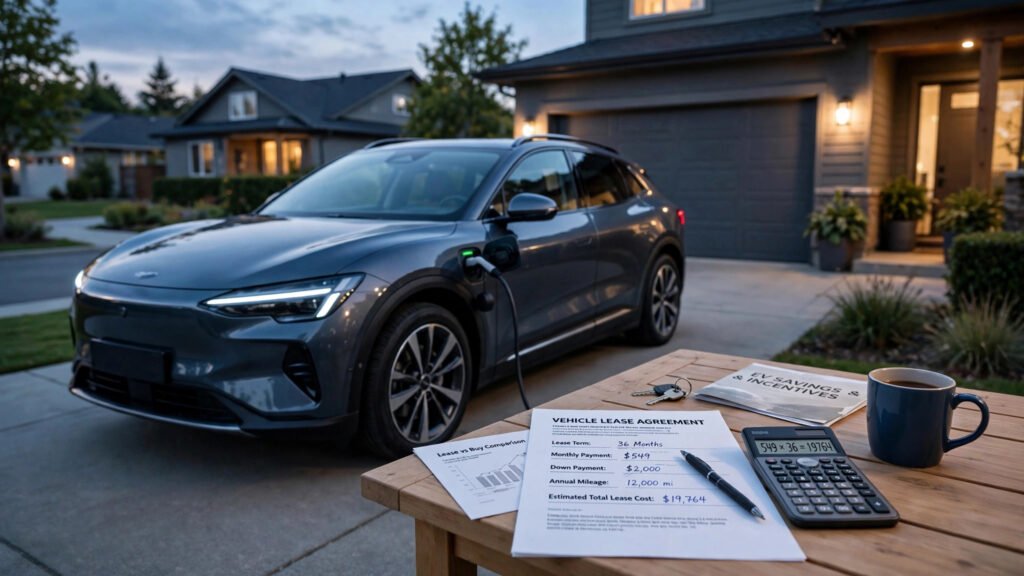
Is It Cheaper to Lease an EV in 2026? The Full Math
Electric vehicles have never been more tempting — or more confusing to pay for. With sticker prices still running higher than gas cars, the lease-versus-buy question matters more for EVs than almost any other vehicle. In 2026, leasing an EV can genuinely be the cheaper path for many drivers, thanks to a quirk in federal tax credit rules that funnels thousands of dollars into lease deals. But “can be” isn’t “always is.” Here’s the full math on whether leasing an EV beats buying one in 2026.
Why EV Leases Got So Attractive
The secret ingredient is the federal Clean Vehicle Credit. When you buy an EV, the credit (up to $7,500) comes with strict requirements: income caps, MSRP caps, and battery-sourcing rules that disqualify many popular models. But when a dealer leases you an EV, the leasing company claims a commercial clean vehicle credit with far fewer restrictions — and passes the savings to you as a “lease cash” discount, often $7,500 right off the capitalized cost. This single quirk makes lease payments on EVs hundreds of dollars cheaper per month than the purchase math would suggest.
Manufacturers have piled on: in 2026, aggressive lease incentives on models like the Hyundai Ioniq 5, Kia EV6, Tesla Model 3, and Chevrolet Equinox EV have pushed effective monthly payments into territory that competes with gas-car leases. Check current federal credit rules at the IRS clean vehicle credit page so you know exactly which models qualify for what when you buy versus lease.
The Case for Leasing: Technology Moves Fast
EV technology is still improving at a pace gas cars never did. Battery range, charging speed, and driver-assistance features are advancing year over year — a 2026 EV will likely feel dated by 2029 in ways a 2026 Camry won’t. Leasing lets you surf that wave: drive the latest tech for three years, hand back the keys, and upgrade without worrying about resale value.
Depreciation is the other argument. EVs have historically depreciated faster than gas cars as new models undercut old ones on range and price. When you lease, the residual value risk sits with the leasing company, not you. If the market value of your EV craters, that’s their problem at turn-in. For drivers who’d otherwise stress about resale, that’s real peace of mind — and it pairs well with keeping running costs low by learning basic car maintenance, since EVs still need tires, brakes, and cabin filters.
The Case for Buying: Long-Term Math Wins
Leasing looks cheap monthly because you’re only paying for three years of depreciation plus interest — but you never build equity, and you pay acquisition fees, disposition fees, and mileage penalties (typically $0.20–$0.30 per mile over 10,000–12,000 miles/year). Drive 18,000 miles a year and the overage charges alone can erase the lease advantage.
Buying wins for high-mileage drivers and long-term keepers. An EV you own for 8–10 years spreads its higher purchase price across a decade of cheap “fuel” — electricity costs roughly equivalent to $1–$2 per gallon of gas in most states, and EVs have far fewer moving parts to maintain. Compare your candidates’ efficiency at FuelEconomy.gov to estimate real charging costs. And if you buy a qualifying model and your income fits, you can claim the purchase credit yourself — check eligibility details at the Department of Energy’s EV resource hub.
Running the Numbers: A 2026 Example
Take a $45,000 EV with a $7,500 lease credit passed through. A 36-month lease at typical 2026 money factors might run $450–$550/month with $3,000 due at signing — roughly $20,000–$23,000 total over three years, after which you own nothing. Buying the same car: $45,000 minus a $7,500 purchase credit (if eligible) = $37,500 financed; at 6% over 60 months that’s about $725/month, but after five years you own a car still worth perhaps $15,000–$18,000.
The breakeven depends on your situation: lease if you drive under 12,000 miles/year, want new tech every few years, and can’t use the purchase credit (income too high or model ineligible). Buy if you drive a lot, keep cars long, and qualify for the purchase credit. Either way, read the fine print like you would any contract — the same vigilance that helps you avoid extra fees when renting a car applies to lease disposition fees, wear-and-tear charges, and early termination penalties.
Hidden Lease Gotchas to Watch
EV leases have specific traps. First, home charging: if you can’t install a Level 2 charger (renters, take note), you’ll rely on public charging at 2–3x the cost, eroding the fuel savings that make the lease attractive. Second, insurance: EVs cost more to insure than comparable gas cars, sometimes 15–25% more — get quotes before signing. Third, the money factor: dealers can mark up the lease interest rate, so negotiate it just like an APR. Finally, confirm the $7,500 is actually in your deal as a capitalized cost reduction, not just advertised vaguely; ask for the lease worksheet line by line.
Conclusion
Don’t forget state and utility incentives, which stack on top of everything above. Many states still offer EV rebates of $1,000–$7,500 in 2026, and dozens of utilities provide discounted overnight charging rates or rebates for home charger installation — some covering up to $1,000 of the cost. These local perks apply whether you lease or buy, and they can swing a borderline decision decisively. Check your state’s energy office website and call your utility before you sign anything; buyers who skip this step routinely leave four figures on the table.
Is it cheaper to lease an EV in 2026? For moderate-mileage drivers who want the latest tech and can’t claim the purchase credit, yes — the commercial-credit loophole makes leases genuinely cheaper month-to-month. For high-mileage drivers and decade-long keepers who qualify for the purchase credit, buying wins over time. Run your own numbers with your mileage, your charging situation, and your tax eligibility — the right answer is personal, but now you know exactly how to find it.
Frequently Asked Questions
Do I get the $7,500 tax credit when I lease an EV?
Not directly — the leasing company claims the commercial clean vehicle credit and typically passes it to you as a $7,500 discount on the lease (lease cash). Confirm it’s itemized in your lease worksheet before signing.
Is leasing an EV cheaper than leasing a gas car in 2026?
Often, yes, on a monthly basis. The $7,500 lease credit plus manufacturer incentives have pushed many EV lease payments at or below comparable gas models, and charging costs less than gasoline for most drivers.
What mileage limit do EV leases have?
Most leases allow 10,000–12,000 miles per year, with overage fees of $0.20–$0.30 per mile. High-mileage drivers should either negotiate a higher-mileage lease upfront or buy instead.
Can I buy my leased EV at the end?
Usually yes, at the predetermined residual value in your contract. But be cautious: if market values have dropped below the residual, you’re overpaying — in that case, walk away and lease or buy something newer.
Do I need a home charger to make an EV lease worthwhile?
Strongly recommended. Home charging costs a fraction of public fast charging; without it, the fuel savings that justify the EV premium shrink dramatically. Factor charger installation ($500–$2,000) into your total cost.