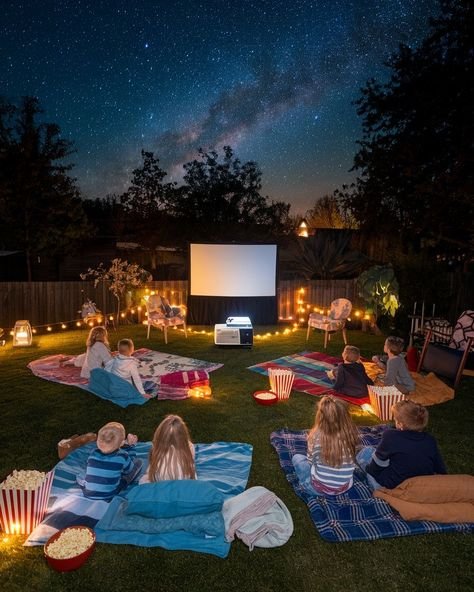
How to Make a Small Backyard Movie Night Feel Special
How to Make a Small Backyard Movie Night Feel Special
Learning how to make a small backyard movie night feel special doesn’t require expensive gear — it requires atmosphere. A $70 projector, some string lights, and a little intention turn an ordinary Saturday into the kind of evening your kids (or friends) talk about for weeks. I’ve done backyard movie nights everywhere from elaborate setups to “laptop on a patio table,” and I can tell you the magic is 80% vibe, 20% equipment. Here’s the complete guide for under $100.
The Screen: Cheap Options That Work
- White sheet ($10-15): A king-size white flat sheet, ironed, hung tight. The classic for a reason — it works fine.
- Projector screen ($25-40): More reflective than a sheet, with grommets for hanging. Worth it if you’ll do this more than twice.
- Garage door or white wall: Free. Surprisingly good image quality.
- Inflatable screen ($80-150): The premium option — big, stable, impressive. Only worth it for regular movie nights.
Hang the screen between trees, from a clothesline, or on PVC pipe frame. The key: pull it taut. Wrinkles are the enemy of image quality.
The Projector: What You Actually Need
Don’t overthink this. For backyard use after dark, a basic 1080p mini projector ($70-120 on Amazon) is plenty — brand names matter less than lumens (look for 200+ ANSI lumens for backyard use). Connect via HDMI to a laptop or streaming stick. Built-in speakers on cheap projectors are terrible — plan on separate audio (below). Higher-end projectors ($300+) give better brightness and contrast, but the $100 tier is genuinely watchable in full darkness. Wait until it’s actually dark — starting at dusk means a washed-out first 30 minutes.
Sound: The Part People Forget
Bad audio ruins movie night faster than a dim picture. Options:
- Bluetooth speaker: A decent portable speaker ($30-50) near the seating beats any projector’s built-in speaker by miles.
- Soundbar: If you have one indoors, bring it out for the night.
- FM transmitter ($15): For drive-in vibes — broadcast audio to car radios if people are watching from cars.
Test the audio before guests arrive. Dialogue clarity matters more than bass.
Seating and Atmosphere (Where the Magic Lives)
- Seating: Blankets and pillows on the lawn, lawn chairs, bean bags, or an inflatable mattress for the full cozy effect. Layer blankets — it gets cold after dark even in summer.
- String lights ($15-25): The single highest-ROI purchase. Warm white LEDs strung overhead transform a backyard instantly. Turn them off during the movie, on before and after.
- Bug defense: Citronella candles, a fan (mosquitoes can’t fly in wind), and bug spray available. Nothing kills magic like swarms.
- Fire pit or candles: For the pre-movie hangout. Extinguish before the show (light competes with the screen).
Snacks: The Concession Stand
Set up a small table: popcorn (the star — see whether a popcorn machine is worth it), candy boxes like a real theater, drinks in a cooler, and maybe nachos. Let kids “buy” snacks with play money for extra fun. Keep it simple — the movie’s the main event. For what to watch, family favorites and crowd-pleasing blockbusters work best outdoors.
The Takeaway
A special backyard movie night needs: a screen (sheet works), a basic projector, separate speakers, string lights, bug defense, cozy seating, and popcorn. Total: under $100 if you shop smart, and most of it is reusable forever. Start the movie at full dark, silence the phones, and enjoy the best cheap entertainment there is. Compare with the drive-in theater experience if you want the same vibe without the setup.
Frequently Asked Questions
What time should I start a backyard movie night?
Start the movie 30-45 minutes after sunset — you need genuine darkness for the picture to look good. In summer, that might mean 9-9:30 PM, which is late for small kids; consider starting with the pre-movie hangout (snacks, string lights, music) at 8 and the film when it’s dark enough. Check sunset times for your date. Starting too early is the #1 rookie mistake — a washed-out image in twilight disappoints everyone.
Will my neighbors complain about noise?
Maybe — be proactive. Keep speakers pointed at your seating (not at fences), keep volume reasonable, and end by 11 PM. Better yet: invite the neighbors. A heads-up text (“movie night Saturday, done by 11, you’re welcome to join!”) prevents 90% of complaints. Check local noise ordinances if you’re in a strict HOA area. Bluetooth speakers at moderate volume rarely cause issues; a full soundbar cranked up might.
Can I stream movies to a backyard projector legally?
For personal, non-commercial use with friends and family: yes, your streaming subscriptions work fine through a laptop or streaming stick connected to the projector. What’s not allowed: charging admission, advertising it publicly, or showing films to large public audiences (that requires a license). The “backyard movie night with friends” scenario is exactly what personal-use rights cover. Don’t overthink it — but don’t sell tickets either.
What if it rains on movie night?
Have a plan B announced in advance: “rain date Sunday” or “moves to the living room.” Projectors and water don’t mix — even light drizzle can damage electronics. Check the forecast the morning of; if rain chance is above 30%, make the call early so guests can plan. A pop-up canopy over the equipment (not the seating — canopies trap projector heat and block views) works for very light mist, but real rain means postponing. The screen and seating dry; the projector might not.
How do I power a projector and speakers outdoors?
Three options: the nearest outdoor outlet with an extension cord (simplest — most patios have one), a portable power station ($100-200, also useful for camping and power outages), or a projector with a built-in battery (2-3 hours, enough for one film). Run the extension cord along fences or under rugs to avoid trip hazards, and keep all connections off the ground in case of dew — a plastic bin flipped over the power strip works as a rain guard. For speakers, Bluetooth eliminates one cable entirely. Test the full setup (power, video, audio) the day before, not ten minutes before showtime — outdoor troubleshooting in the dark is miserable, and your audience will remember the delay more than the movie.