Is It Safe to Eat Leftovers After Three Days?
Is It Safe to Eat Leftovers After Three Days?
Day-three leftovers stare at you from the fridge, and the question is always the same: still good, or gamble? The USDA’s answer is clear — most leftovers are safe for 3 to 4 days when refrigerated properly. But “most” is doing work in that sentence, and the details matter.
Here’s exactly what’s safe, what isn’t, and how to tell.
The 3-4 Day Rule and What It Covers
The USDA guideline: cooked leftovers are safe for 3 to 4 days in the refrigerator at 40°F or below. This covers cooked meats, poultry, fish, soups, stews, pasta dishes, casseroles, and cooked vegetables. Day 1 is the cooking day — so Monday’s dinner is good through Thursday. After day 4, freeze or toss; the risk curve steepens and “it smells fine” isn’t a reliable test for all pathogens.
Some foods have shorter windows: fresh fish and shellfish leftovers (1-2 days), deli meats opened (3-5 days), and anything with raw-egg-based sauces. Hard cheeses, pickles, jams, and condiments last far longer — weeks to months. The 3-4 day rule assumes proper handling: refrigerated within 2 hours of cooking, stored airtight, fridge actually at 40°F or below (check with a $5 fridge thermometer — many fridges run warmer than their dials claim).
Signs It’s Time to Toss (Beyond the Calendar)
Trust your senses as backup, not primary: sliminess on meat, sour or off smells, visible mold (toss the whole container — mold roots run deeper than the spot), and fizzy or bloated packaging all mean discard immediately. But the scary truth: some dangerous bacteria (like listeria) don’t change taste, smell, or appearance. That’s why the calendar rule exists — it’s your protection against the invisible stuff.
High-risk leftovers deserve extra caution: rice (cool fast and refrigerate within 1 hour — Bacillus cereus is the famous rice pathogen), reheated more than once (each cycle degrades safety; reheat only what you’ll eat), and leftovers left out — the 2-hour rule is absolute (1 hour above 90°F). For pregnant people, older adults, young children, and anyone immunocompromised, be stricter: 2-3 days max, reheat steaming hot to 165°F. Food safety margins exist to protect the vulnerable.
Making Leftovers Last Safely
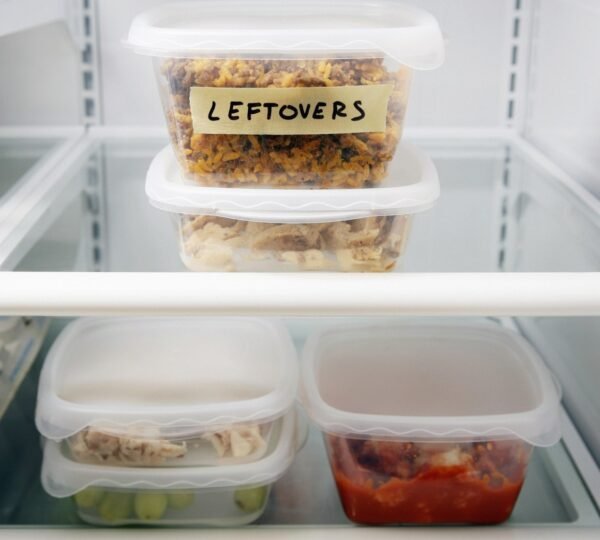
Maximize safe life with proper technique: cool quickly (shallow containers, ice baths for big pots), refrigerate within 2 hours, store airtight (exposure to air accelerates spoilage), and keep the fridge at 37-40°F. Date everything — the calendar only works if you know when day 1 was. A strip of masking tape and a marker takes five seconds.
Freeze strategically: if day 3 arrives and you won’t eat it today, freeze it — the freezer pauses the clock completely. Portion before freezing for easy thawing, and use within 3-4 months for best quality. Thaw in the fridge (never on the counter), and reheat to 165°F throughout. And the golden habit: when in doubt, throw it out. A $4 container of questionable chili is never worth a night of food poisoning. Your gut — in both senses — will thank you.
Leftover Safety Quick Reference
The rules:
- Most cooked leftovers: safe 3-4 days refrigerated (day 1 = cook day).
- Fish/shellfish: 1-2 days. Deli meat opened: 3-5 days.
- Refrigerate within 2 hours; keep fridge at 40°F or below.
- Date every container — no mystery leftovers.
- Freeze on day 3-4 if you won’t eat it; freezer pauses the clock.
- Reheat to 165°F; reheat only what you’ll eat.
- When in doubt, throw it out — especially for vulnerable people.
The Bottom Line
Yes, leftovers are generally safe after three days — the USDA allows 3 to 4 days refrigerated for most cooked foods. The keys are proper cooling, airtight storage, a fridge at 40°F or below, and honest dating.
Day four is decision day: eat it, freeze it, or toss it. And when anything seems off, the trash can is always the right call.
Leftovers and Food Safety Myths
Myth #1: ‘You can’t reheat leftovers more than once.’ The truth is nuanced — each reheat-cool cycle degrades quality and adds risk, so the guidance is to reheat only what you’ll eat. But a single proper reheat to 165°F is perfectly safe; the danger is in repeated lukewarm warming that never reaches safe temperatures. The practical rule: portion before storing, reheat portions once, eat promptly.
Myth #2: ‘The smell test is reliable.’ For many spoilage organisms, yes — off smells mean toss. But some dangerous pathogens (Listeria, notably) don’t affect taste, smell, or appearance at all. That’s why the 3-4 day calendar rule exists alongside your senses: senses catch spoilage, the calendar catches the invisible. Use both. Myth #3: ‘Putting hot food directly in the fridge is dangerous.’ Modern refrigerators handle warm (not steaming) food fine, and the far greater danger is leaving food out for hours to ‘cool completely’ — the danger zone does its damage during those hours.
Myth #4: ‘Freezing kills bacteria.’ Freezing pauses bacterial growth but doesn’t kill most pathogens — they reactivate on thawing. That’s why you freeze food while it’s still good (day 3-4), not as a rescue for day-7 leftovers. And myth #5: ‘Microwaving makes food safe regardless.’ Microwaves heat unevenly, leaving cold spots where bacteria survive — stir halfway, let stand, and verify steaming throughout. The microwave is a tool, not a magic wand.
Quick Answers
Can you eat 5-day-old leftovers?
The USDA says 3-4 days for most cooked leftovers. Day 5 is past the guideline — when in doubt, throw it out, especially for vulnerable people.
Does freezing reset the leftover clock?
It pauses it — freeze on day 3-4 while food is still good. Don’t freeze already-questionable food expecting the freezer to fix it.
Is it safe to reheat leftovers twice?
Best practice is reheating only what you’ll eat, once, to 165°F. Repeated cooling-reheating cycles degrade both safety and quality.
The vulnerable-population guidance deserves emphasis because the stakes differ. For pregnant people, the elderly, young children, and the immunocompromised, food safety margins shrink: Listeria — which grows at refrigerator temperatures and doesn’t change food’s taste or smell — is the specific concern, and it’s why these groups should observe stricter leftover limits (2-3 days), reheat everything steaming hot to 165°F, and avoid high-risk leftovers like deli meats unless reheated. These aren’t overcautious suggestions; listeriosis hospitalizes and kills vulnerable people every year from exactly these foods. When cooking for or as a vulnerable person, the calendar gets shorter and the thermometer gets more use. Caution here isn’t anxiety — it’s care.
Further reading: FoodSafety.gov on leftovers, the USDA FoodKeeper guidance.